
The 40-foot shipping container is one of the most important innovations in global logistics. From transporting electronics from China and furniture from Europe to exporting agricultural products from Africa, the 40ft container has become the preferred choice for businesses moving large volumes of cargo efficiently.
Whether you're an importer, exporter, freight forwarder, logistics student or warehouse operator, understanding the dimensions, weight and carrying capacity of a 40ft shipping container is essential for planning transport and reducing shipping costs.
What Is a 40ft Shipping Container?
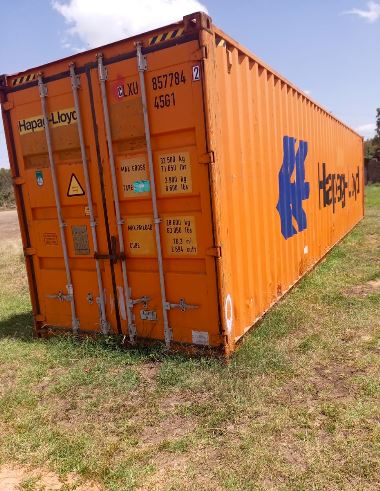
A 40-foot shipping container is an ISO-standard steel container designed for international cargo transport by sea, rail and road. Although it shares the same width and height as a standard 20ft container, it provides nearly double the cargo volume, making it ideal for bulky goods.
It is commonly used for:
- International imports and exports
- Furniture shipments
- Retail goods
- FMCG products
- Electronics
- Plastic products
- Building materials
- Warehouse storage
- Container offices
Because of its large internal volume, the 40ft container has become one of the most widely used containers in international trade.
New Holland TT55 Tractor Price in Kenya (2026): Specifications, Features, Review & Buying Guide
What Is CBM?
CBM stands for Cubic Metres, a measurement used to determine the amount of space cargo occupies inside a container.
A standard 40ft container offers approximately:
67 cubic metres (CBM)
Freight forwarders use CBM to:
- Calculate shipping charges.
- Estimate storage requirements.
- Plan cargo loading.
- Optimize container utilization.
Knowing your cargo's CBM helps determine whether a 20ft or 40ft container is the more economical option.
Standard 40ft Shipping Container Dimensions
Below are the typical dimensions of a standard dry 40ft container.
| Specification | Measurement |
| External Length | 12.19 metres (40 ft) |
| External Width | 2.44 metres (8 ft) |
| External Height | 2.59 metres (8 ft 6 in) |
| Internal Length | Approximately 12.03 metres |
| Internal Width | Approximately 2.35 metres |
| Internal Height | Approximately 2.39 metres |
| Internal Capacity | Approximately 67 cubic metres (CBM) |
| Door Width | Approximately 2.34 metres |
| Door Height | Approximately 2.28 metres |
Weight Specifications
Understanding container weight helps transporters comply with shipping and road regulations while maximizing payload.
| Weight Specification | Approximate Value |
| Tare (Empty) Weight | 3,700–4,000 kg |
| Maximum Gross Weight | Around 30,480 kg |
| Maximum Payload | Around 26,000–27,000 kg |
Although a 40ft container provides almost twice the storage volume of a 20ft container, its maximum payload is only slightly lower because the container itself weighs more.
Shipping in Kenya Explained: A Complete Beginner's Guide to Local and International Shipping
What Can Fit Inside a 40ft Container?
A 40ft container offers approximately 67 CBM of internal cargo space, making it suitable for transporting high-volume shipments.
Typical cargo includes:
- Furniture
- Household goods
- Consumer electronics
- Clothing and textiles
- Packaged food products
- Plastic products
- Paper products
- Agricultural exports
- Industrial equipment
Businesses often choose a 40ft container when cargo occupies a lot of space but does not exceed the weight limits.
20ft vs 40ft Container
| Feature | 20ft Container | 40ft Container |
| External Length | 6.06 m | 12.19 m |
| Internal Volume | 33 m³ | 67 m³ |
| Tare Weight | ~2.3 tonnes | ~3.8 tonnes |
| Maximum Payload | ~28 tonnes | ~26–27 tonnes |
| Best For | Heavy cargo | Bulky cargo |
If your shipment is dense and heavy, a 20ft container is often the better choice.If your shipment is large but relatively light, a 40ft container usually offers better value because of its additional cargo volume.
What Is the Difference Between a 40ft GP and a 40ft High Cube Container?
One of the most common questions among importers is the difference between a 40ft GP (General Purpose) container and a 40ft High Cube (HC) container.
The primary difference is height.
A standard 40ft GP container has an external height of approximately 2.59 metres, while a 40ft High Cube container is approximately 2.90 metres high, providing additional internal cargo volume.
Weighbridges in Kenya (2026): Rules, Fines, Weight Limits & Complete Guide for Truck Owners
High Cube containers are commonly used for:
- Furniture
- Lightweight bulky cargo
- Consumer goods
- Export products requiring extra vertical space
Businesses transporting large-volume cargo often choose High Cube containers to maximize loading efficiency.
Explore more logistics guides on Monolith Africa and stay ahead in transport and international trade.