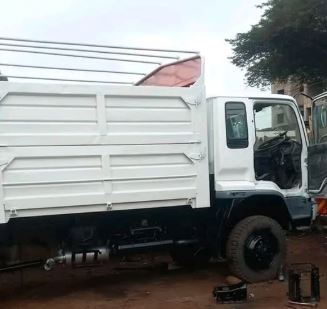
Why Many Kenyan Truck Owners Avoid the Isuzu FTR in 2026
If you’ve spent time in Kenyan trucking forums or transport yards, you’ve probably heard the debate:
“Why don’t common wananchi buy the Isuzu FTR?”
At first glance, the Isuzu FTR looks like a solid investment — powerful engine, heavy chassis, and strong road presence. But when you break down the numbers under Kenyan transport economics, the story changes.
Let’s break it down clearly.
The Weight Problem: Lighter Trucks Make More Money
In Kenya, profitability in trucking depends heavily on payload capacity, not just engine power.
According to axle load regulations by the Kenya National Highways Authority (KeNHA):
-
Two-axle trucks have a maximum gross vehicle weight (GVW) of approximately 18 tonnes.
Now here’s the key:
GVW = Truck weight + Cargo weight
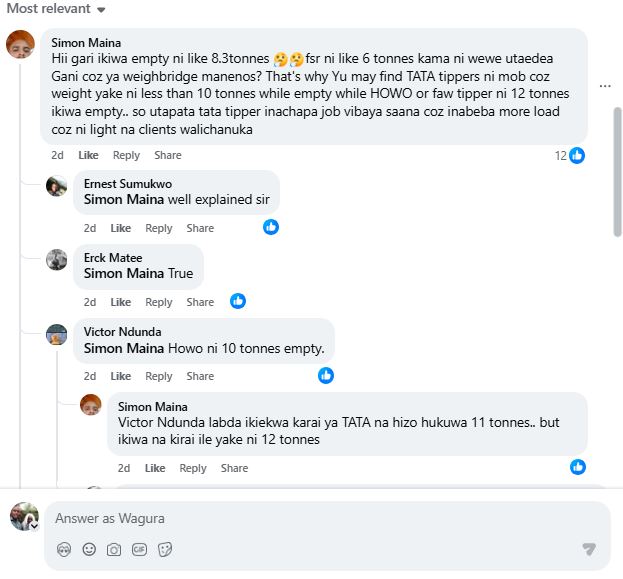
If your truck is heavy when empty, you carry less cargo.
The Isuzu FTR is relatively heavier compared to lighter F-Series models like the FSR. When empty, some configurations approach nearly 7 tonnes. That reduces what you can legally carry.
Example:
-
Max allowed weight: 18 tonnes
-
Truck weight: 7 tonnes
-
Legal cargo capacity: 11 tonnes
Now compare with a lighter truck weighing 6 tonnes:
-
Legal cargo capacity: 12 tonnes
That extra 1 tonne per trip directly affects revenue.
Axle Configuration Confusion (FTR vs FTS vs FSR)
There is often confusion between:
-
FTR
-
FTS
-
FSR
In Isuzu naming:
-
R generally refers to rear-wheel drive configuration.
-
S models may include dual rear wheels or 4x2/4x4 configurations depending on specification.
-
4x2 means 4 wheels touching ground, 2 powered.
-
6x2 means 6 wheels touching ground, 2 powered.
-
6x4 means 6 wheels touching ground, 4 powered.
Many Kenyan buyers prefer configurations that maximize cargo-to-weight efficiency, not necessarily higher traction.
Fuel Consumption vs Revenue
The Isuzu FTR has a larger engine compared to lighter F-Series trucks.
That means:
✔ More power
❌ Higher fuel consumption
For long-haul transporters operating on tight margins (cement, sand, farm produce, construction materials), fuel efficiency is critical.
If fuel eats into your profit, the truck becomes less attractive — especially for small-scale transporters.
Purchase Price Barrier
Another reason many “common wananchi” avoid the FTR is cost.
Historically, F-Series trucks like FTR and FVZ have been significantly more expensive than lighter FSR units.
Some models have crossed:
-
KSh 8M – 12M (depending on year and configuration)
-
Specialized tippers and government-spec units even higher
That price bracket often targets:
-
Government contracts
-
NGOs
-
UN agencies
-
Large construction firms
Not individual transport entrepreneurs.
Target Market Matters
From industry discussions, the FTR tends to target:
-
Large-scale contractors
-
Infrastructure projects
-
Institutional buyers
-
Fleet operators
Meanwhile, most Kenyan independent truck owners focus on:
-
Maximum payload
-
Lower fuel consumption
-
Faster return on investment (ROI)
For them, a lighter FSR may recover investment faster.
Ground Contact & Drive Wheels Explained
Truck classification discussions also mention:
-
4x2 → 4 wheels on ground, 2 powered
-
6x2 → 6 wheels on ground, 2 powered
-
6x4 → 6 wheels on ground, 4 powered
More drive wheels improve traction but increase:
-
Weight
-
Maintenance costs
-
Fuel usage
Again, profitability becomes the deciding factor.
So Is the Isuzu FTR a Bad Truck?
No.
The Isuzu FTR is:
✔ Strong
✔ Reliable
✔ Durable
✔ Suitable for heavy-duty applications
But in Kenya’s transport business, the formula is simple:
The lighter the truck (within legal compliance), the more cargo you can carry — the more money you make.
And for many small-to-medium transporters, that difference determines survival