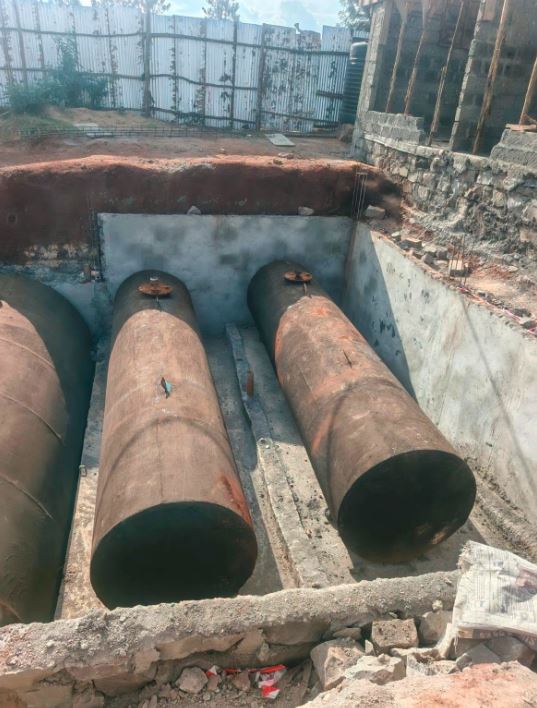
Underground fuel tanks are used by petrol stations, transport companies, farms, factories, institutions and businesses that store diesel or petrol in bulk. Installing one involves considerably more than purchasing a steel tank and placing it underground.
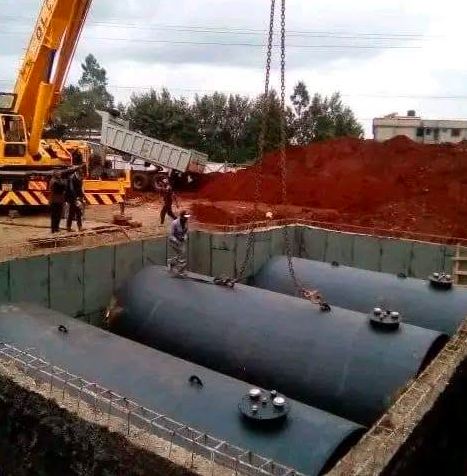
The project may require excavation, structural works, waterproofing, pipework, pumps, leak protection, electrical works and regulatory approval. Consequently, buyers should distinguish the tank-only price from the cost of a complete installed fuel-storage system.
Need an Underground Fuel Tank or Petrol Station Installation?
Contact Selfeolando Limited for fuel tanks, tank chambers, pumps, pipework, canopies and complete petrol-station construction.
📞 Call 0714 606 226 or 0785 580 042
Mention that Monolith Africa referred you for priority assistance.
Underground Fuel Tank Price List in Kenya
The following figures are indicative planning estimates. Actual quotations depend on steel thickness, tank design, number of compartments, corrosion protection, fittings, transportation and installation requirements.
| Tank capacity | Indicative tank-only price |
| 1,000 litres | KSh80,000–150,000 |
| 5,000 litres | KSh150,000–280,000 |
| 10,000 litres | KSh220,000–400,000 |
| 15,000 litres | KSh280,000–480,000 |
| 20,000 litres | KSh350,000–600,000 |
| 30,000 litres | KSh490,000–750,000 |
| 40,000 litres | KSh600,000–1,000,000+ |
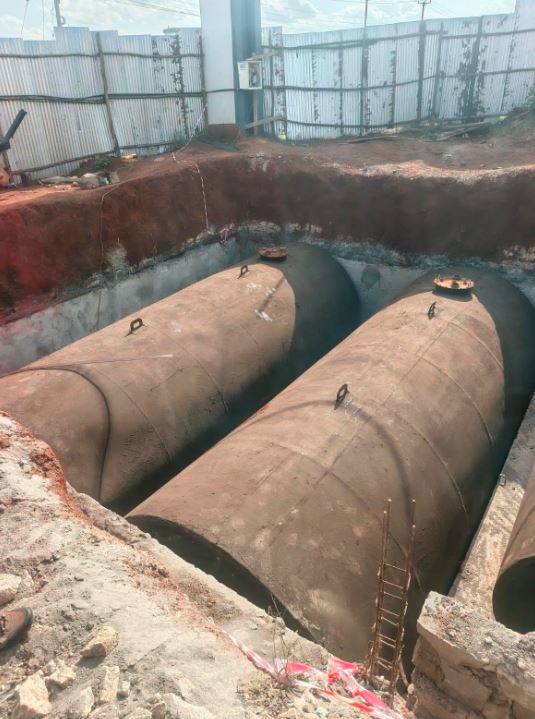
These are not fixed supplier prices. Obtain a site-specific quotation before preparing a budget or applying for financing.
A low quotation may cover only the fabricated steel shell. Ask whether VAT, delivery, installation, testing, fittings and civil works are included.
What Determines the Price of a Fuel Tank?
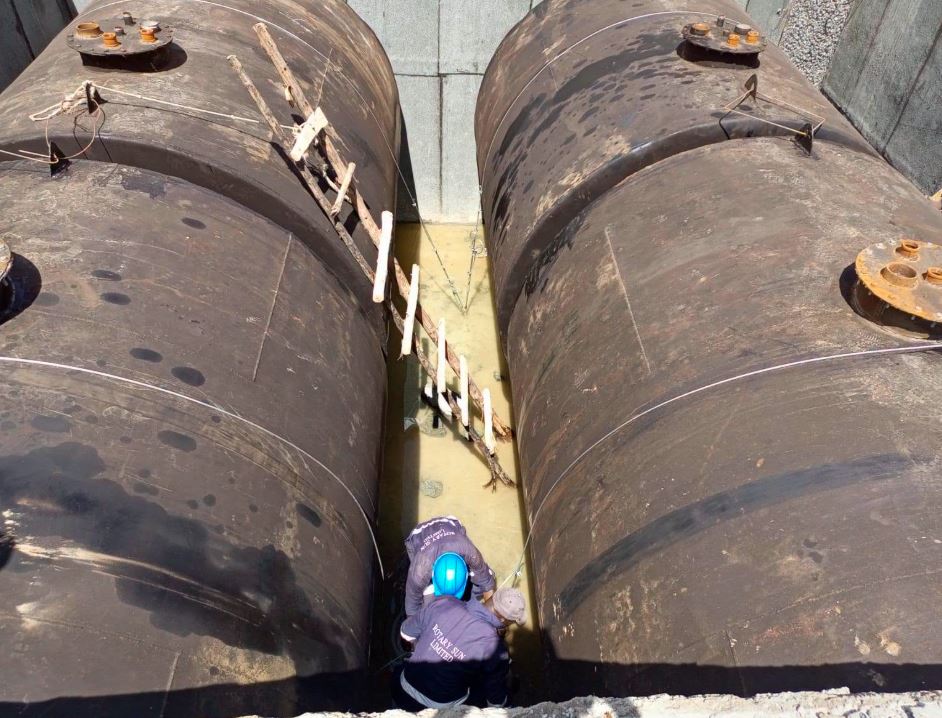
Capacity is important, but it is not the only factor affecting cost.
Tank construction
A double-wall tank will generally cost more than a basic single-wall unit because it provides an additional containment layer. The specification must match the stored product, site risks and applicable engineering requirements.
Steel thickness
Larger tanks and installations exposed to greater external pressure may require heavier steel. A buyer should not select steel thickness by price alone; it should follow the approved engineering design.
Compartments
A station intending to store petrol and diesel separately may order several individual tanks or a compartmentalised tank. Compartments, internal partitions and additional pipe connections increase fabrication costs.
Protective treatment
Underground steel requires appropriate corrosion protection. Surface preparation, protective coatings and other anti-corrosion systems add to the initial price but may extend the tank’s useful life.
Fittings and accessories
The quotation may include or exclude:
- Manholes and access covers
- Fill and suction pipes
- Vent pipes
- Valves and fittings
- Dip and monitoring points
- Leak-detection equipment
- Overfill protection
- Dispenser connections
- Pumps and gauges
Ask the fabricator to identify every included component.
Fuel Tank Installation in Kenya
Underground fuel-tank installation should be undertaken by qualified professionals using approved engineering designs. The process begins with a site assessment covering soil conditions, groundwater, available space, vehicle loading and the type and quantity of fuel to be stored.
Need an Underground Fuel Tank or Petrol Station Installation?
Contact Selfeolando Limited for fuel tanks, tank chambers, pumps, pipework, canopies and complete petrol-station construction.
📞 Call 0714 606 226 or 0785 580 042
Mention that Monolith Africa referred you for priority assistance.
Installation may include excavation, reinforced tank-chamber construction, approved bedding or supports, tank positioning, anchoring, waterproofing and corrosion protection. Contractors must also install the required filling pipes, vents, suction lines, valves, access manholes, leak-monitoring equipment and connections to the fuel dispensers.
Before commissioning, the tank and pipework should undergo appropriate integrity, pressure and leak tests. The complete system must also be properly earthed, labelled and protected from vehicle impact and unauthorised access.
Installation costs depend on tank capacity, steel specification, excavation depth, soil and groundwater conditions, pipework distance, number of dispensers and required civil works. Buyers should request an itemised quotation separating the tank price from excavation, construction, equipment, testing and approvals.
A fuel tank should never be installed as an informal do-it-yourself project. Confirm applicable NEMA, EPRA, county planning, fire-safety and occupational-safety requirements before construction begins.
What Is a Petrol-Station Tank Chamber?
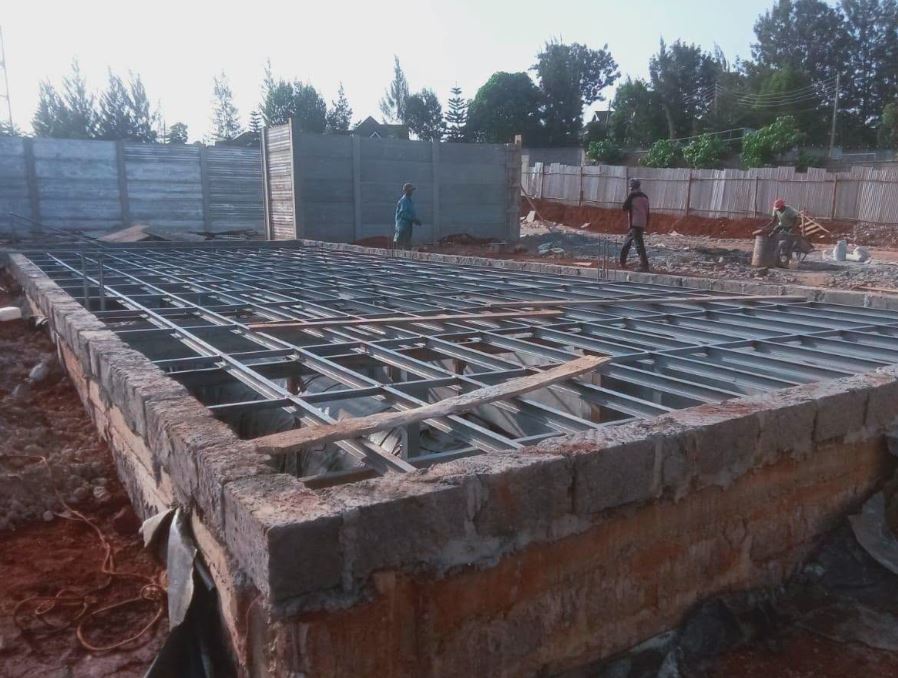
A tank chamber or tank pit is the engineered underground area prepared to accommodate and protect a fuel-storage tank. It is not simply a hole excavated in the ground.
Depending on the approved design and site conditions, the work may include:
- Excavation with safe working clearance
- Reinforced concrete or masonry construction
- Tank bedding, anchoring or supporting structures
- Waterproofing and groundwater protection
- Tank manholes and inspection points
- Fuel pipework, valves and vents
- Approved backfilling material
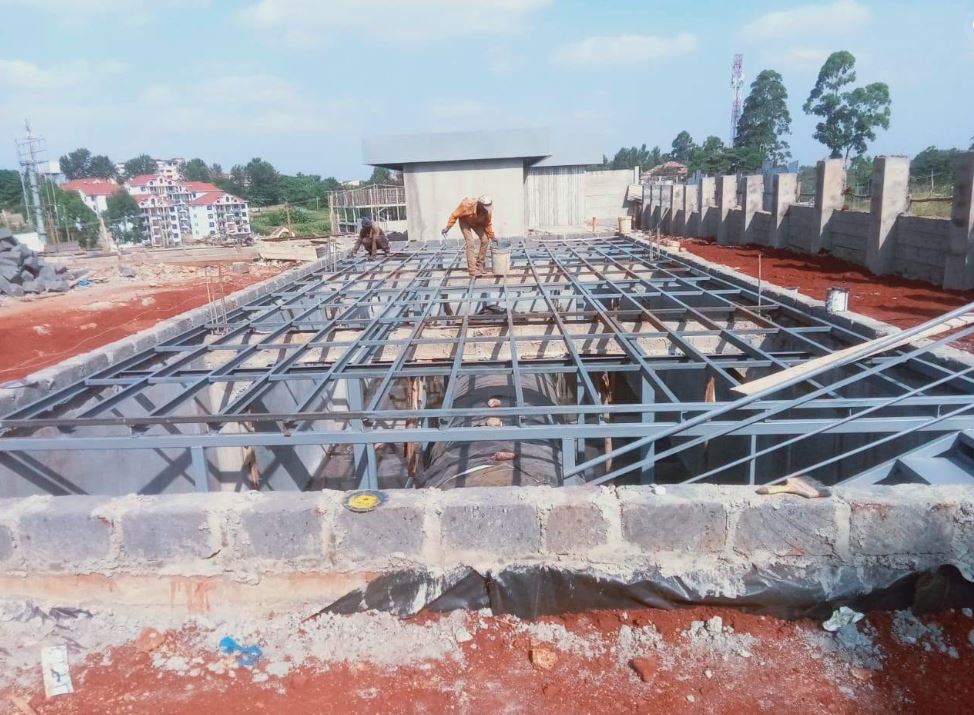
- A load-bearing cover slab where required
- Drainage and monitoring provisions
Not every installation uses an identical concrete chamber. Some tanks are installed using engineered bedding and approved backfilling, while other sites may require more substantial containment or structural works.
The final design depends on soil conditions, groundwater level, vehicle loading, tank type and whether the development combines liquid fuels with LPG or autogas. A qualified engineer and the relevant regulators should approve the design.
How Much Does Tank Installation Cost?
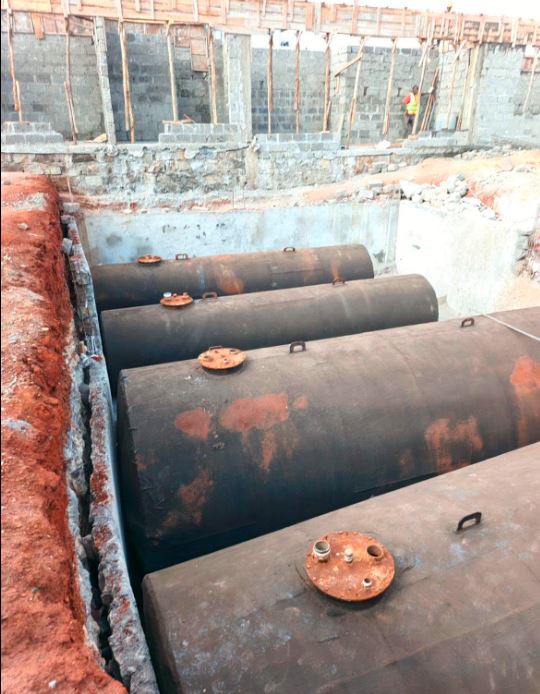
Installation costs can equal or exceed the tank’s purchase price. The contractor must first inspect the site before giving a dependable figure.
A complete quotation may include:
| Cost component | What it covers |
| Site investigation | Soil, groundwater, access and loading assessment |
| Excavation | Machinery, labour and disposal of excavated material |
| Civil works | Concrete, reinforcement, masonry and access structures |
| Tank installation | Lifting, positioning, supports and anchoring |
| Pipework | Fill, vent, suction and return connections |
| Pumping equipment | Dispensers, transfer pumps, gauges and controls |
| Electrical work | Earthing, cabling, control panels and safety systems |
| Testing | Pressure, integrity and leak testing |
| Reinstatement | Backfilling, slab construction and surface finishing |
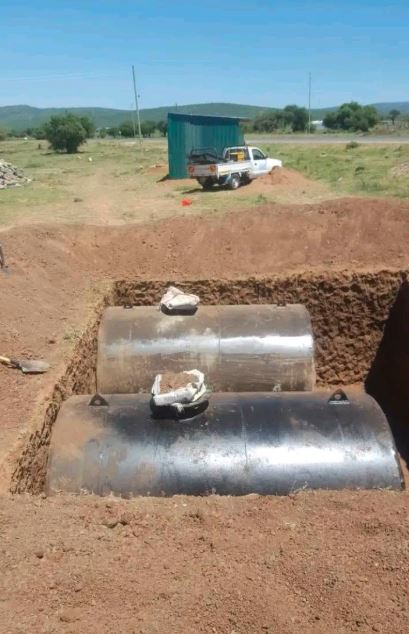
Can You Use a 1,000-Litre Underground Tank?
A 1,000-litre tank may support limited diesel storage for a generator, farm, workshop or small private operation, subject to the applicable regulations. However, it may be too small for an ordinary public petrol station because frequent deliveries could make operations inefficient.
The correct capacity should be based on expected daily sales or consumption, delivery frequency, working stock, reserve requirements and the number of fuel products.
Public petrol stations commonly require substantially greater total storage and separate provision for different fuels.
Approvals Required Before Installation
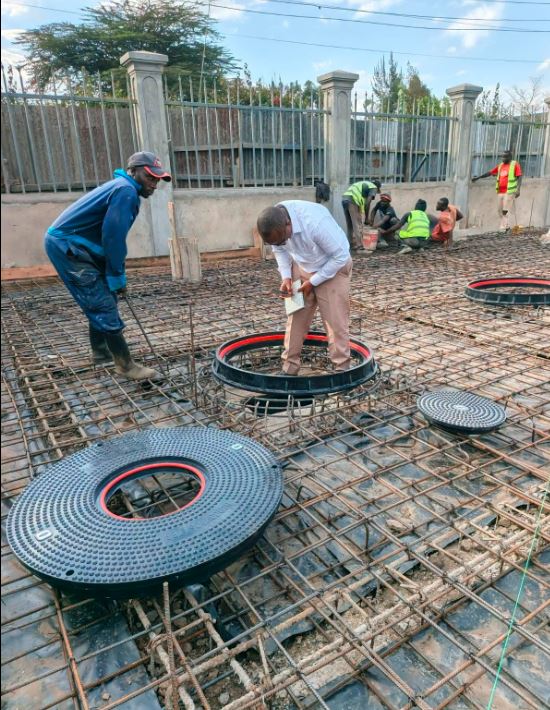
Do not fabricate tanks or excavate the site before confirming the approvals and technical requirements.
Depending on the project, the process can involve:
- Land ownership and appropriate land use
- County planning and construction approvals
- Environmental assessment and approval
- EPRA petroleum-facility construction approval
- Approved architectural and engineering drawings
- Fire and occupational-safety requirements
- Inspection and testing of the installation
- An operating licence before commencing business
NEMA states that an Environmental Impact Assessment must be undertaken by a registered expert before a qualifying project begins. EPRA also issues construction permits to help ensure petroleum facilities are developed according to applicable requirements.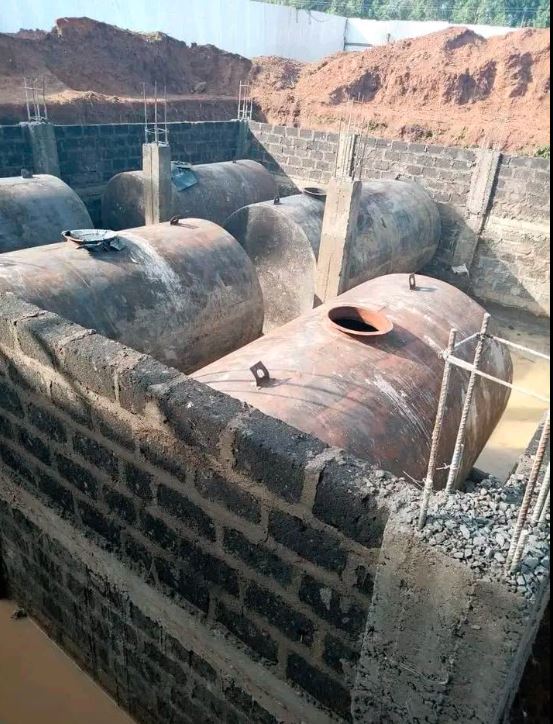
Need an Underground Fuel Tank or Petrol Station Installation?
Contact Selfeolando Limited for fuel tanks, tank chambers, pumps, pipework, canopies and complete petrol-station construction.
📞 Call 0714 606 226 or 0785 580 042
Mention that Monolith Africa referred you for priority assistance.