Every truck, trailer, low loader and commercial vehicle operating on Kenya's roads must comply with legal limits on height, width, length and axle loading. These standards are designed to protect bridges, highways, overhead utilities and other road users while ensuring freight moves safely across the country.
Whether you're transporting containers, heavy machinery, construction equipment or agricultural produce, understanding these limits can help you avoid costly delays, penalties and permit complications.
Why Vehicle Dimension Limits Matter
Kenya's transport network is built to accommodate vehicles within specified dimensions. Oversized vehicles can damage bridges, strike overhead power lines, obstruct traffic or create safety risks if they exceed the legal limits without approval.
When a vehicle or its load exceeds these limits, the transporter may need an abnormal load permit or axle load exemption, depending on the nature of the movement and the applicable regulations.
Maximum Legal Vehicle Dimensions in Kenya
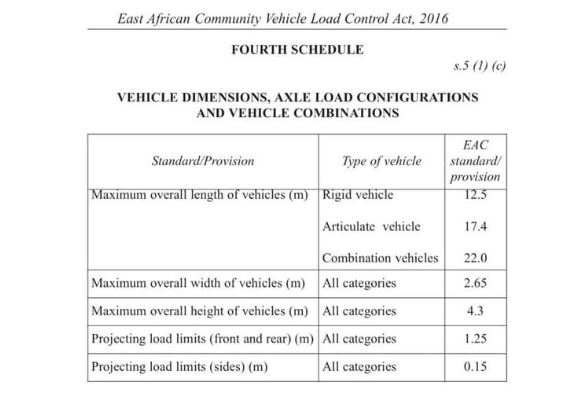
Under the East African Community Vehicle Load Control Act and related transport regulations, the standard vehicle
dimension limits include:
| Vehicle Dimension | Maximum Legal Limit |
| Rigid vehicle length | 12.5 metres |
| Articulated vehicle length | 17.4 metres |
| Combination vehicle length | 22.0 metres |
| Maximum vehicle width | 2.65 metres |
| Maximum vehicle height | 4.3 metres |
| Front or rear load projection | 1.25 metres |
| Side load projection | 0.15 metres |
These limits apply to normal road operations unless a transporter has received the appropriate authorization.
What Happens If Your Vehicle Exceeds These Limits?
Exceeding the legal dimensions does not automatically prevent transport, but it usually means additional approval is required before the journey begins.
Depending on the cargo, transporters may need to:
- Apply for an abnormal load permit.
- Conduct a route survey.
- Use escort vehicles where required.
- Display warning signs and lighting.
- Follow an approved travel route and schedule.
Planning ahead reduces delays and helps protect road infrastructure.
Common Loads That May Require Special Approval
Many industries regularly transport equipment that exceeds normal vehicle dimensions, including:
- Excavators
- Bulldozers
- Motor graders
- Mobile cranes
- Road rollers
- Wind turbine components
- Large transformers
- Steel bridge beams
- Industrial tanks
- Precast concrete structures
These movements often require specialist transport planning and regulatory approval.
What About High Cube Containers?
One of the most discussed topics in Kenya's transport industry is the movement of 40-foot High Cube (HC) containers.
High cube containers provide additional internal cargo space compared to standard containers, but depending on the trailer configuration and overall loaded height, transporters should ensure they remain within applicable legal limits or obtain any required approvals before travelling.
Because regulations and operational guidance may evolve, operators should always confirm current requirements before transporting oversized container loads.
Tips for Transporters
Before beginning any journey:
- Measure your vehicle and cargo accurately.
- Confirm the total loaded height.
- Check overall width and length.
- Verify axle loading.
- Plan the safest route.
- Apply for any required permits before travel.
Good preparation protects your cargo, avoids enforcement issues and reduces costly transport interruptions.
Why These Rules Matter
Vehicle dimension regulations are not intended to slow business—they exist to keep Kenya's roads safe, preserve public infrastructure and ensure that oversized loads move in a controlled and predictable manner.
Understanding these limits helps transporters remain compliant while supporting efficient movement of goods across the country's growing logistics and construction sectors.
Whether you're moving a single container or transporting oversized construction equipment, Monolith Africa helps you navigate the road ahead.