Understanding Kenyan Number Plates: Colors, Prefixes, Special Plates & Hidden Meanings (2026 Guide)
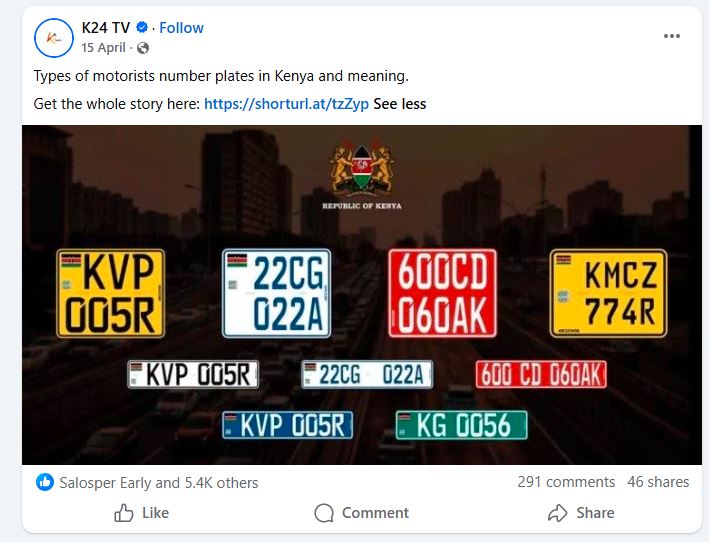
If you've ever driven on Kenyan roads, you've probably noticed that not all number plates look the same. Some are white, others yellow, blue, green, or even red. You may also have seen unique prefixes like GK, KTC, KHM, or diplomatic plates with CD. These aren't random—they reveal the purpose of the vehicle or the organization that owns it.
Here's a simple guide to help you understand the different types of number plates used in Kenya.
Standard Private Vehicle Number Plates
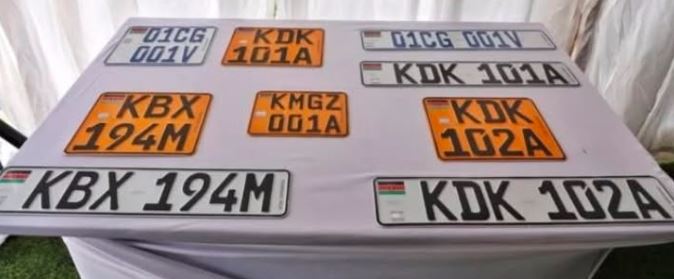
Most privately owned vehicles in Kenya use the familiar white reflective background with black lettering.
Examples include:
- KDA 123A
- KDG 456M
- KDL 789P
These vehicles are registered through the National Transport and Safety Authority (NTSA) and follow Kenya's national registration sequence.
Public Service Vehicle (PSV) Number Plates
Matatus, buses, taxis, and other Public Service Vehicles use yellow reflective number plates with black characters.
The yellow background makes commercial passenger vehicles easy for enforcement officers and the public to identify.
Government Number Plates (GK)
Vehicles owned by the Government of Kenya carry the GK prefix.
Examples include:
- GK A123A
- GK B456B
These vehicles are assigned to ministries, government departments, county offices, and other public institutions.
Kenya Defence Forces (KDF) Number Plates
Military vehicles have a completely different registration system.
Common prefixes include:
- KA – Kenya Army
- KAF – Kenya Air Force
- KN – Kenya Navy
Because these prefixes are reserved for the military, the civilian registration sequence skipped KDF, meaning NTSA moved directly from KDE to KDG in the normal registration series.
Diplomatic Number Plates
Diplomatic vehicles are among the easiest to recognize because they have a red background with white lettering.
Common prefixes include:
- CD – Corps Diplomatique (Diplomatic Missions)
- UN – United Nations agencies
- Other diplomatic mission identifiers
These plates enjoy privileges under international diplomatic agreements.
International NGO Number Plates (KX)
International non-governmental organizations operating in Kenya are issued KX registration plates.
These also feature a red background, making them distinct from ordinary private vehicles.
Organizations with these plates typically include international aid agencies, humanitarian organizations, and development partners.
Special Registration Plates
Several categories of vehicles receive unique prefixes based on their purpose.
KTC – Tractors
Agricultural tractors are registered using the KTC prefix.
These machines are mainly used on farms and construction sites.
KHM – Heavy Machinery
Bulldozers, graders, excavators, cranes, rollers, and similar equipment are issued KHM registration plates.
Although they occasionally travel on public roads, they are primarily designed for construction and industrial work.
KTW – Three-Wheelers
Motorized three-wheelers (commonly known as tuk-tuks) use the KTW registration prefix.
This helps distinguish them from motorcycles and ordinary passenger vehicles.
High Office Number Plates
Certain constitutional office holders use unique registrations instead of standard number plates.
Examples include:
- CJ 1 – Chief Justice
- SNA 1 – Speaker of the National Assembly
- SSN 001 – Speaker of the Senate
These plates identify some of the country's highest-ranking public officials.
Why Kenya Doesn't Use the Letters "I" and "O"
One interesting fact about Kenyan number plates is that the letters "I" and "O" are deliberately excluded from the registration sequence.
This is because:
- I can easily be confused with the number 1
- O closely resembles the number 0
To avoid confusion during vehicle identification, law enforcement, and digital registration systems, NTSA simply skips these letters.
As a result, you will never see prefixes such as:
- KBI
- KCI
- KDI
- KBO
- KCO
- KDO
This makes vehicle registration clearer and reduces the chances of identification errors.
🚛 Looking for a driving job? Join the Monolith Africa Driver Database and let transport companies discover your skills. Register today.