If you transport building materials, farm produce, sand, ballast, timber, or other goods in Kenya, chances are you'll eventually pass through a KeNHA weighbridge. While many drivers view weighbridges as just another checkpoint, they play a critical role in protecting Kenya's roads from damage caused by overloaded vehicles.
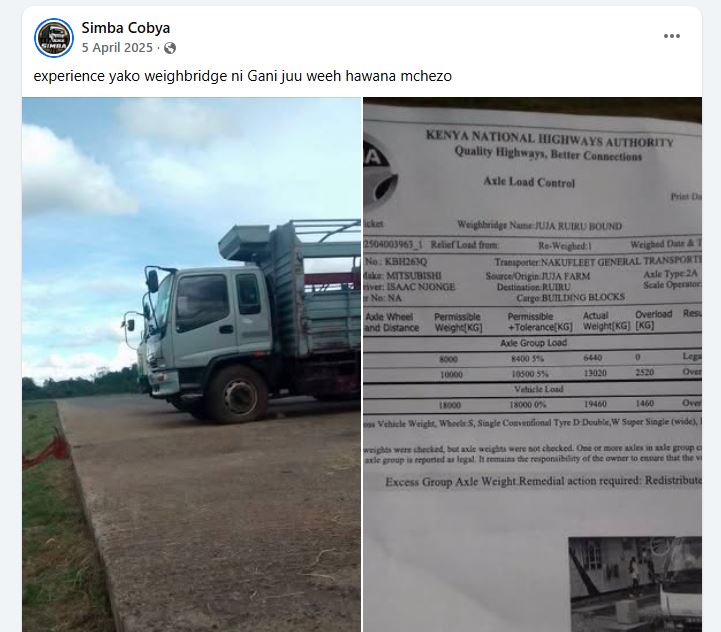
Unfortunately, a single mistake in loading your truck can result in delays, mandatory offloading, fines, and even having your vehicle detained until compliance is achieved.
Here's everything you need to know.
What Is a KeNHA Weighbridge?
A weighbridge is a specialized weighing station operated by the Kenya National Highways Authority (KeNHA) to ensure trucks comply with Kenya's axle load regulations.
Rather than measuring only the total weight of a truck, modern weighbridges also assess how the load is distributed across each axle. Even if the total vehicle weight is legal, one overloaded axle can still lead to penalties.
Understanding a Weighbridge Ticket
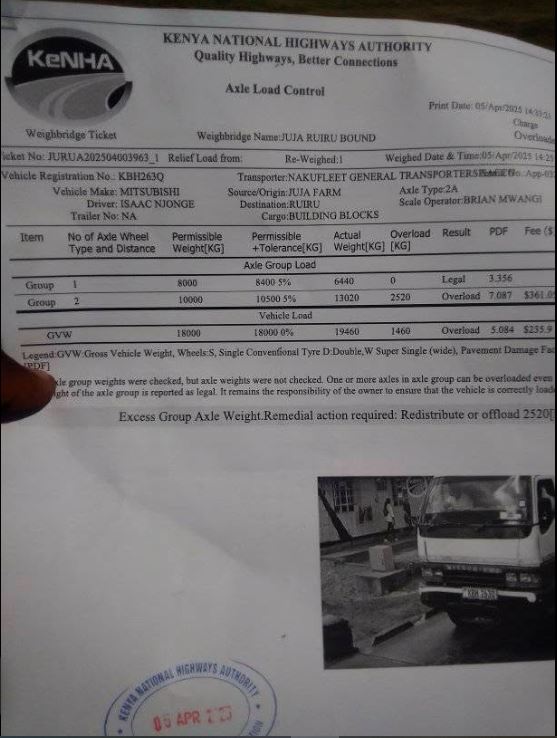
After weighing, the driver receives a weighbridge ticket showing important information such as:
- Vehicle registration number
- Transport company
- Cargo description
- Origin and destination
- Gross Vehicle Weight (GVW)
- Weight on each axle
- Permissible axle load
- Actual measured load
- Overload amount
- Compliance result
In the example shown, one axle exceeded the permitted limit while the overall Gross Vehicle Weight also exceeded the allowable maximum. As a result, the vehicle was flagged as overloaded, and remedial action was required before continuing the journey.
Why Axle Weight Matters More Than Total Weight

Many drivers believe that as long as the truck's total weight is within the legal limit, they are compliant.
That isn't always true.
If one axle carries significantly more weight than the others, it places enormous pressure on the road surface. This causes premature damage to highways, bridges, and pavements.
For this reason, KeNHA checks:
- Individual axle loads
- Tandem axle loads
- Gross Vehicle Weight
- Load distribution
What Happens If Your Truck Is Overloaded?
Depending on the nature of the overload, you may be required to:
- Redistribute the cargo
- Offload excess goods
- Pay applicable overload penalties
- Wait until inspectors confirm compliance
- Receive clearance before continuing your journey
For transporters, this can mean several hours—or even longer—of costly delays.
Why Proper Loading Saves Money
Overloading doesn't just increase the risk of penalties.
It also causes:
- Faster tyre wear
- Brake failure
- Suspension damage
- Poor fuel economy
- Increased accident risk
- Higher maintenance costs
A properly loaded truck is safer, more efficient, and less likely to experience breakdowns.
Tips to Avoid Weighbridge Problems

Before beginning any trip:
- Know your truck's legal carrying capacity.
- Distribute the load evenly across all axles.
- Avoid guessing cargo weight.
- Secure your cargo properly before departure.
- Keep all transport documents ready for inspection.
- If possible, weigh the truck before reaching the official weighbridge.
A few minutes of preparation can save thousands of shillings and prevent unnecessary delays.
🚛 Looking for a driving job? Join the Monolith Africa Driver Database and let transport companies discover your skills. Register today.