
Abnormal Load Permit Fees
Permit charges vary depending on the size and weight of the cargo.
| Description | Permit Fee (KSh) |
| Oversize load up to 25,000 kg | 5,000 |
| Oversize load above 25,000 kg up to 50,000 kg | 10,000 |
| Oversize load above 50,000 kg | 250,000 |
| Width exceeding 2.65 metres | 5,000 |
| Height exceeding 4.20 metres | 10,000 |
| Rigid vehicle length exceeding 12.5 metres | 15,000 |
| Articulated vehicle exceeding 17.4 metres | 20,000 |
| Vehicle combination exceeding 22 metres | 25,000 |
Transporting an excavator, transformer, crane, wind turbine component, bridge beam, or other oversized cargo on Kenyan roads requires more than just a capable truck. If your cargo exceeds the legal weight or dimensions allowed on public roads, you must first obtain an Abnormal Load Permit from the Kenya National Highways Authority (KeNHA).
3 Phase Electric Motor Price in Kenya (2026): 15 HP (11kW) Motor Buying Guide, Uses & Specifications
Failing to secure the required permit can lead to delays, prosecution, fines, and possible damage claims if road infrastructure is affected. This guide explains who needs an abnormal load permit, the application process, permit fees, and the expected approval timeline.
Need help with your application? Monolith Africa can connect you with verified transport compliance providers who assist businesses with abnormal load permit applications and related logistics services.
What Is an Abnormal Load Permit?
An abnormal load permit is an official authorization issued by KeNHA allowing a transporter to move cargo that exceeds Kenya's normal legal limits for vehicle weight or dimensions.
These permits help ensure that oversized cargo can travel safely without endangering road users or damaging bridges, highways, culverts, and other public infrastructure.
Most Dangerous Roads in Kenya (2026): High-Risk Highways & Accident Blackspots
When Do You Need One?
You should apply for an abnormal load permit if you are transporting cargo such as:
- Excavators
- Bulldozers
- Cranes
- Transformers
- Large generators
- Wind turbine components
- Steel bridge beams
- Industrial machinery
- Oversized construction equipment
Generally, any load exceeding the legal limits for weight, width, height, or overall length requires approval before travelling on public roads.
Do Pickup Trucks Need an Abnormal Load Permit?
One of the most common questions among transporters is whether a pickup truck requires an abnormal load permit.
The answer depends on what the pickup is carrying, not the vehicle itself.
A standard pickup transporting cargo within Kenya's legal weight and dimensional limits does not normally require an abnormal load permit. However, if the pickup carries equipment or cargo that exceeds the prescribed width, height, length or axle-load limits, the transporter may need approval from the relevant road authority before travelling on public roads.
How Much Does a Matatu Make in Kenya? 14-Seater Daily Income, Expenses & Owner Profits (2026)
Requirements for an Abnormal Load Permit
KeNHA requires applicants to provide sufficient information to demonstrate that the proposed journey can be completed safely.
Depending on the nature of the load, the application may require:
- A completed permit application.
- Details of the vehicle and cargo.
- A route survey identifying bridges, overhead structures, and other obstacles.
- A proposed travel schedule.
- Police or owner escorts where required.
- Warning lights and safety markings on the vehicle.
- Public notice in a national newspaper for certain exceptionally large movements.
- Any additional information requested by KeNHA to protect road infrastructure and public safety.
How Long Does Approval Take?
Wilson Airport Landing Fees Explained (2026): Helicopter, Private Aircraft & Parking Charges Guide
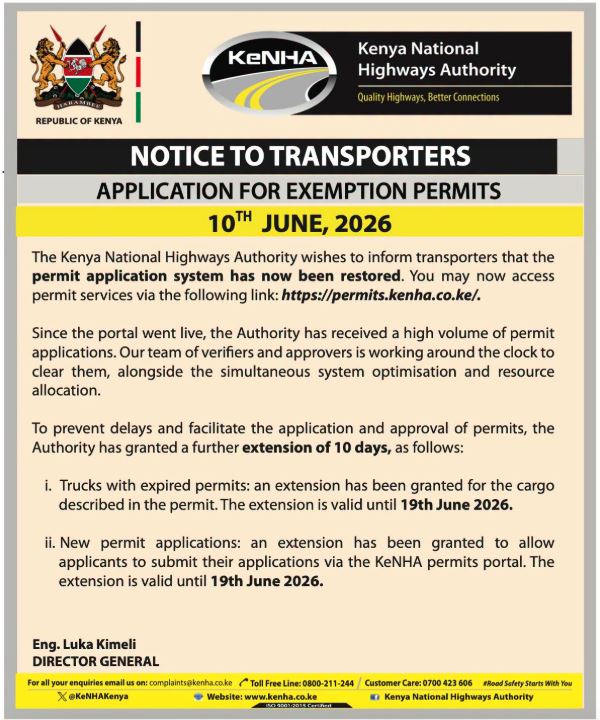
According to KeNHA's Service Delivery Charter, applications for an axle load exemption or abnormal load permit are processed within two working days, provided all the required documentation has been submitted correctly.
Incomplete applications may take longer while additional information is requested.
Do Car Carriers Need an Abnormal Load Permit?
Car carriers are another category that often raises questions.
Whether a permit is required depends on the overall dimensions and weight of the loaded vehicle combination. If the transporter exceeds Kenya's legal limits for vehicle dimensions or axle loading, an abnormal load permit or other applicable authorization may be required before commencing the journey.
These are permit charges for authorized abnormal load movements and should not be confused with penalties for illegally overloading a vehicle.
Heavy Equipment Tender in Kenya (2026): Lowbeds, Cranes & Forklifts Required for Turkana Project
Important Conditions After Approval
Receiving an abnormal load permit does not exempt a vehicle from compliance with other road regulations.
Transporters must:
- Carry the permit throughout the journey.
- Follow the approved route.
- Observe the specified travel schedule.
- Use escorts where required.
- Display warning lights and safety signs.
- Present the vehicle for weighing when directed at a weighbridge.
Failure to comply with the permit conditions may result in enforcement action.
Tips Before Applying
To improve your chances of quick approval:
- Measure your cargo accurately before applying.
- Confirm the total vehicle weight and axle configuration.
- Plan the safest route in advance.
- Check for low bridges, overhead power lines, and narrow sections of road.
- Submit all required documents at the same time to avoid delays.
Frequently Asked Questions
Can an abnormal load permit prevent cargo from being offloaded at a weighbridge?
An abnormal load permit authorizes the movement of approved oversized or overweight cargo under specified conditions. It does not exempt transporters from complying with the permit conditions or other applicable road regulations. Vehicles may still be inspected or weighed by enforcement officers where necessary.
Who issues an abnormal load permit in Kenya?
Abnormal load permits for national highways are issued by the Kenya National Highways Authority (KeNHA) in accordance with the applicable regulations and procedures.
How long does it take to get approval?
According to KeNHA's Service Delivery Charter, applications are typically processed within two working days, provided all required documentation has been submitted correctly.
Excavator Service Engineer Jobs in Africa (2026): Skills, Salary & Career Opportunities
Can I transport an excavator without a permit?
If the excavator causes your vehicle combination to exceed the legal dimensions or allowable weight, you should obtain the necessary permit before travelling.
What happens if I transport an abnormal load without a permit?
Transporters risk enforcement action, delays, penalties and possible liability if road infrastructure is damaged or permit requirements are not met.
Common Equipment That Often Requires an Abnormal Load Permit
Many industries require permits when transporting oversized equipment, including:
- Excavators
- Bulldozers
- Road rollers
- Motor graders
- Cranes
- Asphalt pavers
- Low loaders carrying heavy machinery
- Wind turbine components
- Large transformers
- Steel bridge beams
🚛 Looking for a driving job? Join the Monolith Africa Driver Database and let transport companies discover your skills. Register today.