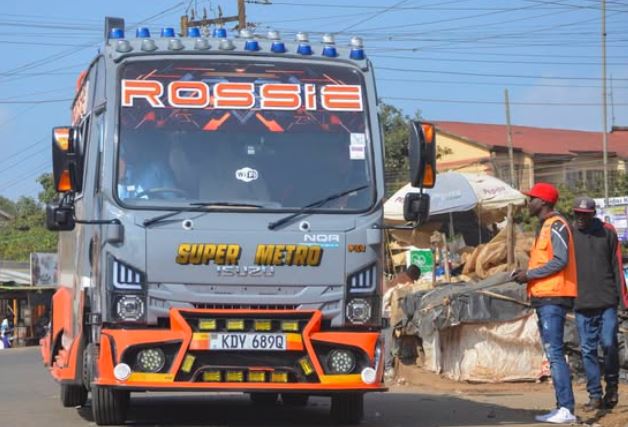
One of the most common questions among aspiring transport investors is: "How much does a matatu make in Kenya?"
The answer is not as straightforward as many people think.While a 14-seater matatu may collect tens of thousands of shillings in fares during a busy day, that money is shared across fuel, Sacco charges, crew wages, parking fees, maintenance and the vehicle owner. What remains as profit depends on the route, number of trips completed and operating costs.
Example Breakdown: 14-Seater Matatu (Limuru – Nairobi Route)
| Item | Approximate Amount (KSh/Day) | Notes |
| Estimated Daily Collections | 150Ksh | Depends on passenger numbers, fares and trips completed. |
| Fuel | ~2,500Ksh | Based on a driver's estimate. |
| Owner's Daily Target | fixed 6,000 | Fixed amount expected by the owner (varies by agreement). |
| Driver & Conductor Share | Balance after expenses | Shared according to their agreement. |
| Trips Completed | ~3 Round Trips (6 one-way trips) | Limuru ↔ Nairobi CBD. |
| Route Distance | ~44.6 km (one way) | Approximately 89 km per round trip. |
A Real-World Example from the Limuru–Nairobi Route

While commuting, I once spoke to a 14-seater matatu driver operating between Limuru and Nairobi CBD, a route of approximately 44.6 km one way.
According to the driver, a typical working day involves:
- Morning trip to Nairobi.
- Return trip to Limuru.
- Midday trip.
- Return trip.
- Evening trip to Nairobi.
- Final return to Limuru.
That translates to about six one-way trips or three full round trips each day.
The driver explained that after completing these trips, the day's collections are divided among several expenses before anyone takes home an income.
Where Does the Money Go?
Based on the driver's explanation, the daily collections first cover operational costs such as:
- Fuel.
- Sacco and stage charges.
- Parking fees.
- Vehicle washing.
- Minor repairs.
- Crew expenses.
The driver estimated that fuel alone could cost around KSh 2,500 per day, depending on traffic, fuel prices and the number of trips completed.
The vehicle owner also expected a fixed daily return of approximately KSh 6,000 before other earnings were shared.
The remaining balance would then be used to pay the crew and cover other operating expenses.
Actual figures vary from one Sacco, route and agreement to another.
Example Breakdown: Larger Commuter Bus (Illustrative)
| Item | Approximate Amount (KSh/Day) | Notes |
| Gross Daily Collections | ~35,000 | On a busy day, according to the driver. |
| Fuel | 13,000 | One of the largest operating expenses. |
| Owner's Daily Target | ~10,500 | Reported fixed daily remittance. |
| Parking, Sacco & Stage Charges | Varies | Depends on the route and operator. |
| Driver & Conductor Earnings | Remaining balance | Paid after operational costs and owner remittance. |
| Slow Day Collections | ~20,000 | Driver indicated some days generate much lower revenue. |
The Economics Change on Larger Routes
The picture changes even further for larger commuter buses.
During another conversation with a driver operating a larger PSV, I was told that gross daily collections could reach approximately KSh 35,000 on busy days.
However, the driver was quick to point out that gross collections are not the same as profit.
According to the driver, significant daily expenses included:
- Fuel of around KSh 13,000.
- Daily owner remittance.
- Parking and terminal charges.
- Crew wages.
- Sacco operational costs.
He also mentioned that some slow days could produce collections of around KSh 20,000, making it much harder for the crew after meeting fixed expenses.
His comment that "we live hand to mouth" reflected the reality that although large amounts of money pass through the vehicle each day, much of it is immediately used to cover operating costs, leaving limited take-home income for the crew.
Why Gross Revenue Can Be Misleading
Many people assume that collecting KSh 30,000 or more in fares means everyone involved is making large profits.
In reality, a matatu operates like a small business with daily expenses that must be paid before profit is calculated.
Typical operating costs include:
- Fuel.
- Driver wages.
- Conductor wages.
- Sacco contributions.
- Parking fees.
- Vehicle maintenance.
- Tyres.
- Insurance.
- Loan repayments.
- Unexpected repairs.
Only after these costs are deducted can the owner determine whether the vehicle made a profit.
Factors That Affect Daily Income
A matatu's earnings depend on several factors, including:
- Route demand.
- Passenger numbers.
- Peak-hour fares.
- Rainy weather.
- Traffic congestion.
- Fuel prices.
- Vehicle capacity.
- Number of trips completed.
- Competition from other operators.
A vehicle completing more trips generally has greater earning potential, but it also incurs higher fuel and maintenance costs.
Interested in Kenya's transport business? Monolith Africa publishes practical guides on matatu economics, PSV Saccos, bus routes, transport costs, commercial vehicles and the business behind Kenya's public transport network. Stay connected for more transport market insights.