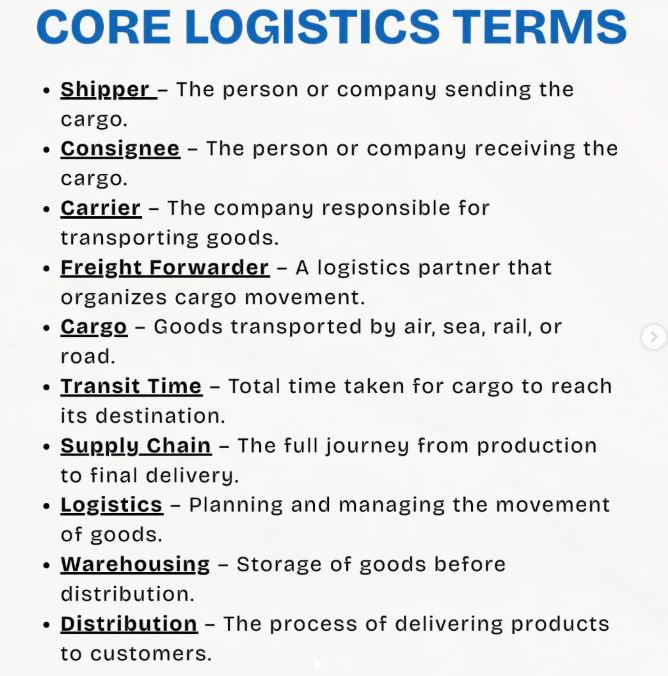
Image showing various logistic terms by Mibm Business School
If you're importing machinery from China, exporting coffee to Europe, or shipping goods across Africa, you've probably heard the terms freight forwarding and cargo handling. Many people assume they mean the same thing—but they don't.
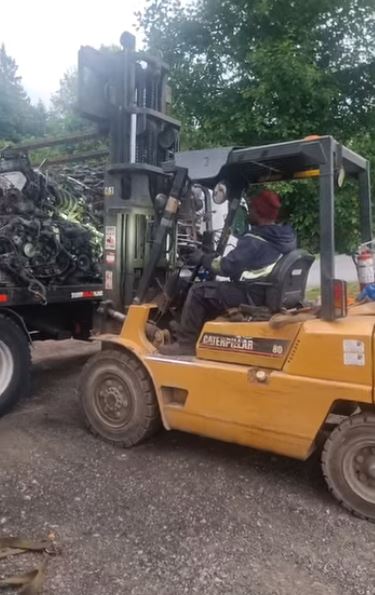
Although both are essential parts of the logistics industry, they perform different roles in moving goods from one country to another.
Understanding the difference can help businesses choose the right logistics partner, reduce delays, and lower shipping costs.
What Is Freight Forwarding?
Freight forwarding is the process of planning, organizing, and managing the movement of cargo from one location to another.
A freight forwarder acts as the logistics coordinator. They don't usually own the cargo or the ship—they arrange the entire journey on behalf of the customer.
Typical freight forwarding services include:
- Booking sea, air or road transport
- Customs documentation
- Import and export paperwork
- Cargo insurance
- Route planning
- Container booking
- Delivery coordination
- International shipping advice
Think of a freight forwarder as the project manager of your shipment.
What Is Cargo Handling?
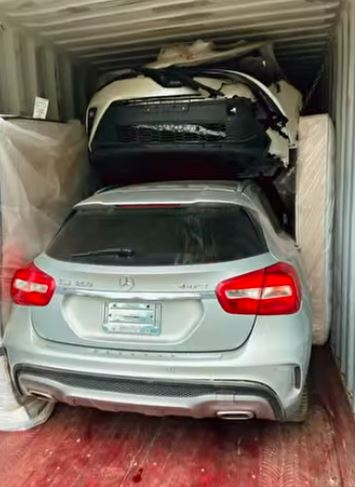
Cargo handling is the physical movement of goods.
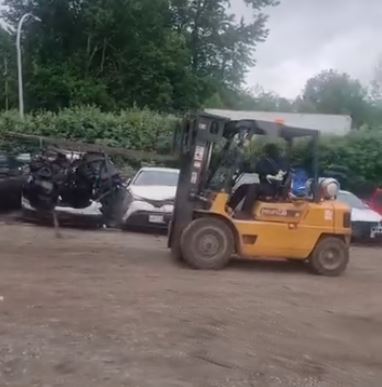
Instead of planning the shipment, cargo handlers are responsible for loading, unloading, storing and securing cargo at ports, airports and warehouses.
Cargo handling may involve:
- Loading containers
- Unloading aircraft
- Forklift operations
- Palletizing cargo
- Warehousing
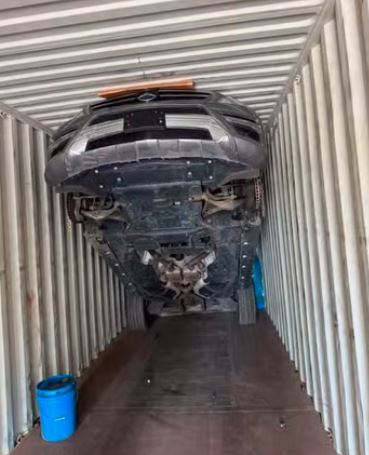
- Container stuffing and stripping
- Cargo inspection
- Weighing and labeling
Cargo handlers are the people who physically move your goods.
The Difference in One Simple Example
Imagine you're importing an excavator from Japan to Nairobi.
The freight forwarder:
- Books the shipping line.
- Prepares shipping documents.
- Arranges customs clearance.
- Tracks the shipment.
- Organizes delivery to your yard.
The cargo handler:
- Unloads the excavator at the port.
- Moves it safely within the terminal.
- Loads it onto a truck.
- Stores it temporarily if necessary.
Both services are necessary, but they perform different jobs.
Freight Forwarding vs Cargo Handling
| Freight Forwarding | Cargo Handling |
| Plans the shipment | Physically moves cargo |
| Books transport | Loads and unloads goods |
| Manages documents | Operates forklifts and cranes |
| Coordinates customs | Stores cargo |
| Organizes delivery | Handles containers |
| Provides shipment tracking | Prepares cargo for transport |
Which Service Does Your Business Need?
The answer is often both.
If you're importing or exporting internationally, you'll usually need:
- Freight forwarding
- Customs clearance
- Cargo handling
- Warehousing
- Inland transport
Many logistics companies provide these services together, allowing customers to work with one provider throughout the shipping process.
Industries That Depend on Freight Forwarding
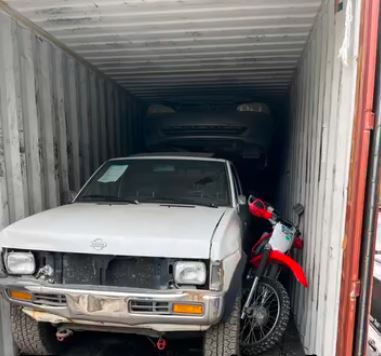
Freight forwarding supports nearly every major industry, including:
- Construction
- Manufacturing
- Agriculture
- Automotive
- Pharmaceuticals
- Mining
- Retail
- E-commerce
- Humanitarian logistics
Whether shipping one pallet or hundreds of containers, efficient logistics keeps businesses moving.