
Road accidents are often discussed in terms of deaths and injuries, but there is another enormous consequence that receives much less attention: money.
Every collision involving a car, motorcycle, bus or truck can trigger costs ranging from hospital treatment and vehicle repairs to insurance claims, lost working hours, damaged cargo and traffic congestion.
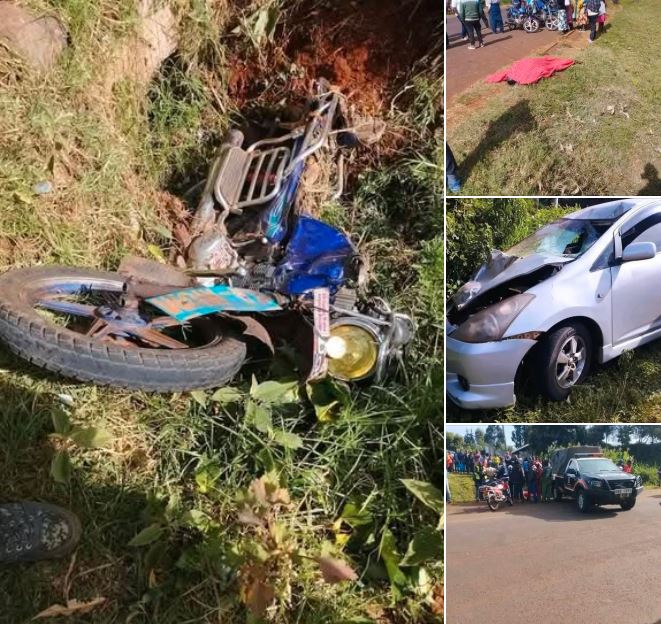
In Kenya, the government's National Road Safety Action Plan 2024–2028 estimates that road traffic crashes cost the economy more than KSh450 billion, equivalent to approximately 5% of GDP.
The United States faces an even larger monetary bill. The US National Highway Traffic Safety Administration (NHTSA) estimated that motor vehicle crashes generated $340 billion in direct economic costs in 2019.So where does all this money actually disappear?
Kenya vs USA: Cost of Road Accidents
| Comparison | 🇰🇪 Kenya | 🇺🇸 United States |
| Estimated economic cost | Over KSh450 billion/year | $340 billion/year |
| Estimated share of GDP | ~5% | ~1.6% |
| Broader societal/quality-of-life cost | No directly comparable official figure used here | Nearly $1.4 trillion |
| Major costs | Healthcare, lost productivity, emergency response, property damage, disability | Property damage, productivity, medical care, congestion, insurance, legal & emergency costs |
| Road deaths | Roughly 4,000–5,000 annually in recent official reporting | 36,640 in 2025 |
| Economic exposure | Particularly large relative to the economy | Much larger absolute monetary cost |
The comparison requires some caution. The KSh450 billion Kenyan estimate and $340 billion American estimate come from different methodologies and periods, so they should not be treated as perfectly equivalent measurements.What they demonstrate clearly, however, is that road crashes are an economic problem as well as a safety problem.
How Can Road Accidents Cost Kenya KSh450 Billion?
The money isn't literally a KSh450 billion bill paid by the government.Instead, thousands of individual losses accumulate across the economy.Consider a commercial truck involved in a serious crash.
The truck may need repairs. Its cargo may be damaged. The driver could require medical treatment. An insurance claim may be opened. A towing company may be required. The vehicle could remain out of service for weeks.Meanwhile, the company loses the income that truck would have generated.
If the crash blocks a major highway, hundreds of other vehicles may lose productive hours and burn additional fuel sitting in traffic.Multiply such consequences across thousands of crashes and the economic impact becomes enormous.
Where Does the Money Go After a Road Accident?

Some of the biggest costs include:
Vehicle and property damage: Cars, trucks, motorcycles, roadside infrastructure, buildings and cargo may require repair or complete replacement.
Lost productivity: An injured driver, passenger or pedestrian may be unable to work for days, months or permanently.
Medical treatment: Ambulances, emergency rooms, surgery, medication, rehabilitation and long-term care all carry costs.
Insurance: Crashes result in vehicle, property, medical and liability claims while insurers also incur costs processing those claims.
Traffic congestion: A major accident can stop thousands of vehicles, wasting fuel and productive working hours.
Commercial vehicle downtime: For a truck, bus or construction vehicle, every day off the road can mean lost revenue.
Emergency response: Police, ambulances, firefighters, hospitals and recovery operators all consume resources responding to serious crashes.
The human cost, particularly death and permanent disability, extends far beyond what can easily be represented in shillings.
What America Reveals About the Real Cost of Crashes
The US data provides an unusually detailed look at where crash-related money disappears.
Of the $340 billion economic cost estimated by NHTSA, approximately:
- $115 billion came from property damage.
- $106 billion came from lost productivity.
- $36 billion resulted from congestion.
- $31 billion represented medical expenses.
The remaining costs included insurance administration, legal services, emergency services and workplace losses.
When researchers included the value associated with lost quality of life, NHTSA estimated the overall societal harm at nearly $1.4 trillion.That distinction is important.
The price of repairing a destroyed vehicle can be calculated fairly easily. Putting a monetary value on permanent disability or a life lost is much more difficult.
Why Kenya's Loss Is Particularly Significant
The USA loses substantially more money in absolute terms, but America's economy is also vastly larger.That's why the percentage of GDP provides another useful perspective.
The US study placed direct crash costs at around 1.6% of GDP, while Kenyan authorities currently describe the country's road-crash burden at approximately 5% of GDP.
In other words, Kenya may lose a substantially larger proportion of its economic output to road crashes.
The World Health Organization estimates that road traffic crashes typically cost countries around 3% of GDP, making Kenya's estimated burden especially concerning.
Road Accidents Are Also a Business Problem
Consider Kenya's transport and logistics industry.A company may spend millions purchasing a truck. But that asset depends on a human being operating it safely every day.A serious crash can simultaneously affect the:
driver → truck → cargo → customer → insurer → lender → employer → hospital → road network.
This is why road safety cannot only mean issuing driving licences and punishing traffic offences.
Investment in driver training, defensive driving, vehicle maintenance, fleet management, telematics, speed management, fatigue monitoring and safer road infrastructure can also be viewed as economic-loss prevention.
Can Kenya Reduce the KSh450 Billion Loss?
Yes, although eliminating road crashes entirely is unrealistic.Kenya's National Road Safety Action Plan targets a 50% reduction in road fatalities by 2030 and identifies areas including safer infrastructure, improved vehicle standards, enforcement, public awareness, post-crash care, safer driving and improved road-safety data.
Even preventing a fraction of the economic losses associated with crashes could potentially preserve billions of shillings in productive economic activity.
And the problem extends beyond Kenya.
The World Health Organization estimates that approximately 1.19 million people die in road crashes globally every year, while another 20–50 million suffer non-fatal injuries.
The Bigger Picture
The cost of road accidents in Kenya is not simply the cost of repairing crashed vehicles.It includes hospital beds occupied, businesses losing workers, trucks sitting in repair yards, cargo failing to reach customers, families losing income, insurers paying claims and commuters spending hours trapped behind crashes.The USA's $340 billion estimate demonstrates just how many hidden costs can sit behind road accidents.
Kenya's estimated KSh450+ billion annual burden therefore represents something bigger than a transport statistic.
It represents economic value that could potentially be protected through safer drivers, safer vehicles, better roads and better management of transport risk.