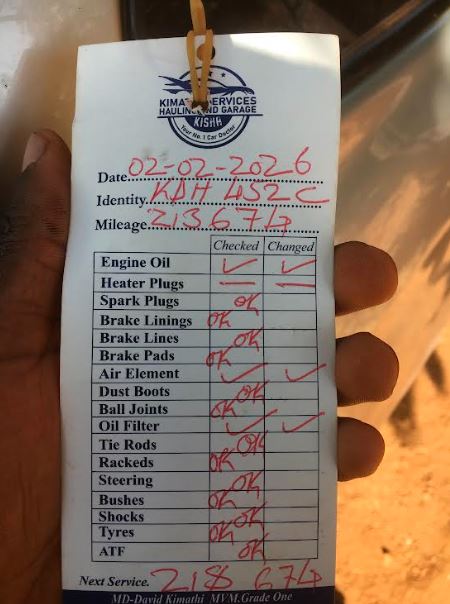
What Is a Car Service Checklist?
A car service checklist is a written record used by mechanics to document the condition of key vehicle components during servicing. It shows what was checked, what was replaced, and what may need attention before the next service.
For vehicle owners, this small paper tag is proof of maintenance, not just a receipt.
Why Service Checklists Matter
Many drivers service their cars but forget what was done. A service checklist solves this by:
-
Tracking mileage at service time
-
Showing parts inspected or changed
-
Helping plan the next service interval
-
Preventing unnecessary repeat repairs
It also helps new mechanics quickly understand the vehicle’s recent history.
What Mechanics Commonly Check During Service
A standard service checklist covers multiple systems, including:
Engine & Fluids
-
Engine oil
-
Oil filter
-
Air filter (air element)
-
Automatic Transmission Fluid (ATF)
These are critical for engine health and fuel efficiency.
Ignition System
-
Spark plugs
-
Heater or glow plugs (for diesel vehicles)
Worn plugs cause poor starting, misfiring, and higher fuel consumption.
Braking System
-
Brake pads
-
Brake linings
-
Brake lines
Brake components are usually marked “OK” or flagged for replacement depending on wear.
Suspension & Steering
-
Ball joints
-
Tie rods
-
Rack ends
-
Bushes
-
Shock absorbers
These parts affect ride comfort, steering control, and tyre wear.
Tyres & Safety Components
-
Tyre condition
-
Dust boots
-
Steering components
Issues here are safety-critical and should never be ignored.
Understanding “Checked” vs “Changed”
On a service checklist:
-
Checked means the part was inspected and found usable
-
Changed means the part was replaced during that service
This distinction helps you avoid changing parts too early or too late.
Mileage and Next Service Date
Service checklists usually record:
-
Current mileage
-
Date of service
-
Recommended mileage for the next service
In Kenya’s driving conditions, many vehicles require servicing every 5,000–10,000 km, especially when driven on dusty or rough roads.
Why You Should Keep Your Service Records
Keeping service checklists helps:
-
Maintain vehicle value
-
Detect recurring issues early
-
Reduce breakdowns
-
Support resale or trade-in negotiations
A car with clear service history is always worth more.