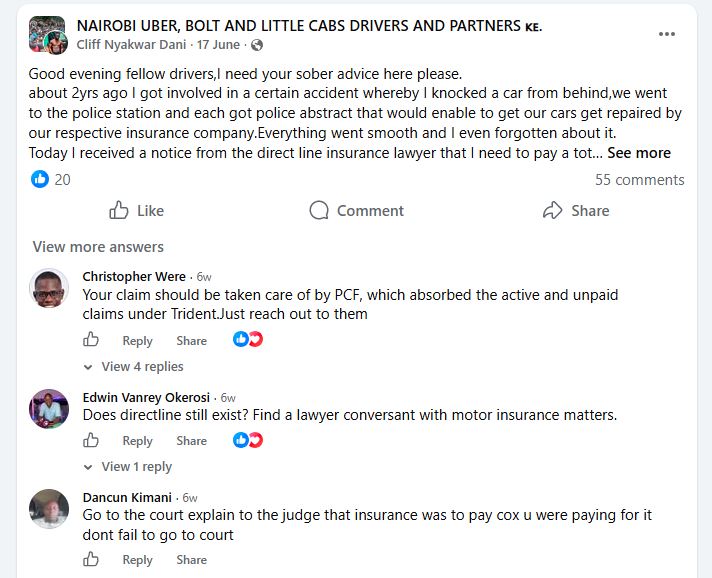
Imagine paying your motor insurance premium every year believing you are fully protected, only to receive a lawyer's demand letter years after an accident asking you to pay hundreds of thousands of shillings yourself.
It sounds unbelievable, but this situation has happened to a number of Kenyan motorists.
If your insurance company fails to honour a claim, can the other party sue you personally?
The short answer is yes—and understanding why could save you from making costly mistakes.
💡 Buyer Tip: Choose an insurer based on claims service and financial strength, not just the lowest premium.
Why People Buy Motor Insurance
When you insure your vehicle, you transfer much of the financial risk of an accident to the insurance company.
For example, if you accidentally hit another vehicle, your insurer is generally expected to investigate the claim, appoint lawyers where necessary, negotiate settlements, and compensate the affected party according to your policy and the law.
This gives many motorists confidence that they are fully protected.
However, insurance is not a guarantee that legal proceedings cannot be started against you.
Why You Can Still Be Taken to Court
In Kenyan law, the person who caused the accident remains the person legally accused of causing the damage.
The insurance company is not the driver.
Instead, it has a contractual obligation to defend or compensate the insured according to the policy terms.
If the insurer delays payment, disputes liability, becomes insolvent, or otherwise fails to settle the claim, the injured party may still file a case against the driver or vehicle owner.
This often surprises motorists who believed their insurer would handle everything.
📄 Always Keep: Police Abstract, insurance policy, claim number, and all correspondence with your insurer.
What Happens After a Demand Letter?
A demand letter is usually the first formal step before a lawsuit.
It does not automatically mean you owe the money.
Instead, it informs you that the claimant intends to pursue legal action if the matter is not resolved.
The worst mistake is ignoring the letter or failing to appear in court if you receive a summons.
If you fail to respond, the court may proceed without hearing your side and could issue judgment against you.
What Documents Should You Keep?
If you've been involved in an accident, safely keep copies of:
- Your insurance policy.
- Police Abstract.
- Accident report.
- Photographs of the accident scene.
- Repair estimates.
- Claim reference numbers.
- Emails or letters exchanged with your insurer.
These documents may become important if a dispute arises years later.
🚗 Did You Know? You can still receive a court summons even if your vehicle was insured at the time of the accident.
What Should You Do If Your Insurer Doesn't Respond?
If your insurance company is delaying your claim:
- Follow up in writing.
- Keep records of every communication.
- Contact the Insurance Regulatory Authority (IRA) for guidance if necessary.
- Seek legal advice if court proceedings have already begun.
- Never ignore a court summons or demand letter.
Early action usually provides more options than waiting until judgment is entered.
How to Choose a Reliable Insurance Company
Price should never be the only factor when buying insurance.
Before purchasing a policy, consider:
- Claims settlement reputation.
- Financial stability.
- Customer reviews.
- Quality of customer service.
- Availability of support after an accident.
- Regulatory compliance.
Sometimes the cheapest premium can become the most expensive decision if claims are poorly handled.